
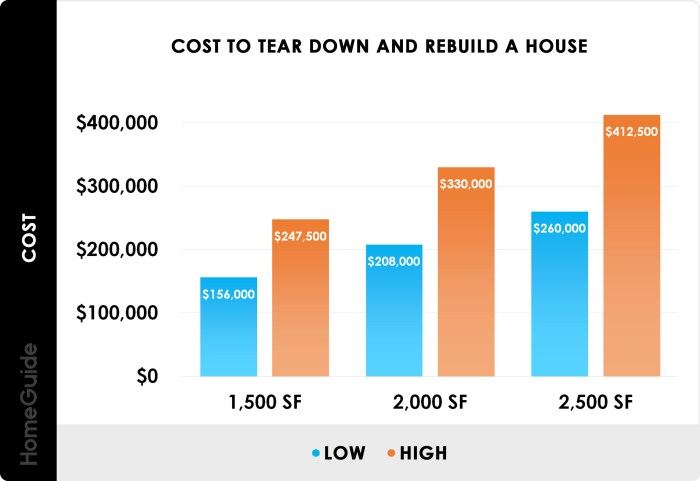
Embark on a journey delving into the world of home demolition and rebuilding costs, where we unravel the intricacies and factors that influence the overall expenditure.
As we delve deeper, we will uncover the breakdown of costs involved in each phase, shed light on the importance of professional assistance, and explore environmental considerations that shape the process.
Factors influencing the cost of home demolition and rebuilding
When it comes to the cost of home demolition and rebuilding, there are several factors that can significantly impact the overall expenses. Understanding these factors is crucial for planning and budgeting effectively. Let's explore some of the common influences on the cost:
Location
The location of the property plays a key role in determining the cost of home demolition and rebuilding. Urban areas with higher demand for construction services may have higher labor and material costs compared to rural areas. Additionally, accessibility to the site and local building regulations can also affect the overall expenses.
Size and complexity of the home
The size and complexity of the home being demolished and rebuilt directly impact the cost. Larger homes with intricate designs or multiple stories will require more labor and materials, leading to higher costs. Similarly, the presence of hazardous materials like asbestos can increase expenses due to specialized removal procedures.
Demolition method
The method used for demolition, whether it's manual demolition, mechanical demolition, or implosion, can influence the cost. While manual demolition may be more labor-intensive and time-consuming, implosion can be quicker but require more planning and safety measures, affecting the overall budget.
Materials used in rebuilding
The choice of materials for the rebuilding process can have a significant impact on the overall cost. High-end materials like marble or hardwood will come at a premium price compared to more cost-effective options like laminate or vinyl. It's essential to balance the desired aesthetic with the budget constraints to ensure a successful rebuilding project.
Cost breakdown of home demolition and rebuilding
When considering the cost breakdown of home demolition and rebuilding, it is essential to understand the various expenses involved in each phase. From labor costs to material expenses, permits, and other miscellaneous fees, a detailed breakdown can help homeowners plan their budget effectively.
Labor Costs
Labor costs typically account for a significant portion of the overall expenses in both demolition and rebuilding processes. Skilled workers, contractors, and laborers play a crucial role in executing the project efficiently. The cost of labor can vary based on the size of the project, location, and the scope of work involved.
Materials
Materials such as lumber, concrete, roofing materials, plumbing fixtures, and electrical components are essential for the rebuilding phase. The cost of materials can fluctuate based on market prices, quality, and quantity required for the project. It is crucial to source materials from reliable suppliers to ensure the durability and quality of the construction.
Permits and Fees
Obtaining permits from local authorities is a mandatory requirement for home demolition and rebuilding projects. Permit fees can vary depending on the location, size of the project, and specific regulations in place. It is essential to factor in permit costs when planning the overall budget for the project.
Equipment Rental
Renting specialized equipment such as excavators, bulldozers, and dump trucks is necessary for the demolition phase. Equipment rental costs can add up significantly, especially for larger projects. It is important to budget for equipment rental expenses to ensure a smooth execution of the demolition process.
Waste Disposal
Proper disposal of construction debris and waste is crucial for maintaining a clean and safe worksite. Waste disposal costs can vary based on the volume of debris generated during the demolition and rebuilding phases. Hiring a reputable waste disposal company can help streamline the process and ensure compliance with environmental regulations.
Cost-saving Strategies
- Obtain multiple quotes from contractors and suppliers to compare prices and negotiate for the best deals.
- Opt for energy-efficient materials and appliances to reduce long-term operating costs.
- Consider DIY projects for non-structural elements to save on labor expenses.
- Plan the project timeline efficiently to minimize labor costs and avoid delays.
- Recycle and repurpose materials from the demolition phase to reduce waste and lower expenses.
Importance of hiring professionals for home demolition and rebuilding

When it comes to home demolition and rebuilding, hiring professionals is crucial for a successful and safe project. Attempting a DIY demolition and rebuilding project can pose significant risks and challenges that can result in costly mistakes.
Risks associated with DIY demolition and rebuilding projects
1. Safety hazards: Without proper training and equipment, DIY demolition can lead to accidents and injuries.
2. Structural damage: Inexperienced individuals may inadvertently damage the structural integrity of the home, leading to costly repairs.
3. Legal issues: DIY projects that do not comply with building codes and regulations can result in fines and delays.
Benefits of hiring licensed professionals for the job
- Expertise: Licensed professionals have the knowledge and experience to handle home demolition and rebuilding efficiently.
- Safety: Professionals follow strict safety protocols to ensure the well-being of everyone involved in the project.
- Legal compliance: Professionals are familiar with building codes and regulations, ensuring that the project meets all requirements.
Examples of how professional expertise can affect the overall cost and outcome
By hiring professionals, you can avoid costly mistakes that may arise from DIY attempts, such as damaging load-bearing walls or electrical systems.
Professional demolition and rebuilding can also result in a faster project timeline and higher quality workmanship, ultimately adding value to your property.
Environmental considerations in home demolition and rebuilding
When it comes to home demolition and rebuilding, there are important environmental considerations that need to be taken into account. The processes involved in demolishing and reconstructing a home can have a significant impact on the environment, from generating waste to consuming resources.
It is crucial to implement sustainable practices to minimize this impact and promote eco-friendly construction methods.
Environmental Impact of Demolition and Rebuilding
Demolition activities can result in the release of harmful substances into the environment, such as asbestos, lead, and other hazardous materials. Additionally, the disposal of construction waste can contribute to landfills and pollution. On the other hand, rebuilding processes often require the extraction of natural resources, further depleting the environment.
Sustainable Practices to Reduce Environmental Harm
- Implementing deconstruction instead of traditional demolition to salvage materials for reuse.
- Using recycled or reclaimed materials in the construction process to reduce the demand for new resources.
- Opting for energy-efficient designs and systems to minimize the environmental footprint of the home.
- Choosing eco-friendly building materials that are renewable, non-toxic, and energy-efficient.
Eco-friendly Materials and Construction Methods
- Utilizing sustainable materials like bamboo, reclaimed wood, recycled steel, and cork for construction.
- Installing energy-efficient appliances, solar panels, and green roofing to reduce energy consumption.
- Incorporating passive heating and cooling techniques, such as proper insulation and orientation, to improve energy efficiency.
- Implementing rainwater harvesting systems and native landscaping to conserve water resources.
Last Recap
In conclusion, understanding the nuances of home demolition and rebuilding costs is crucial for anyone embarking on such a project. By grasping the various factors at play, making informed decisions becomes easier, leading to a successful and cost-effective outcome.
User Queries
What factors can influence the cost of home demolition and rebuilding?
Factors such as location, size of the property, materials used, and labor costs can all play a significant role in determining the overall cost.
How can cost-saving strategies be employed during the home demolition and rebuilding process?
Utilizing salvaged materials, negotiating with contractors, and planning efficiently are effective ways to save costs during the project.
What are the risks associated with DIY demolition and rebuilding projects?
DIY projects can lead to safety hazards, improper handling of materials, and potential damage to the property, resulting in higher costs in the long run.
How do eco-friendly materials and construction methods impact the cost of home demolition and rebuilding?
While initial costs may be higher, eco-friendly practices can lead to long-term savings, reduced environmental impact, and increased property value.